RACS whelping floors are built for breeding programs where sanitation isn’t a preference, it’s what separates consistent litter outcomes from preventable losses. If you’re running multiple breedings per year, the question isn’t whether your whelping area looks clean between litters. It’s whether the surface your next litter will be born onto can actually be sterilized to a standard where the previous litter’s pathogens no longer exist.
Most breeders focus on what goes inside the whelping box: pads, towels, liners. Those manage fluids during a single whelping. But the surface underneath, the actual floor of the whelping area, is where contamination survives between litters. That’s the gap between clean and sanitary, and it’s the gap RACS whelping floors are engineered to close.
The Surface Under the Pad Is the Problem
You replace the pads. You wash the towels. You scrub the box walls. But what about the floor panel those pads were sitting on? Fluids seep through pad edges, between layers, and under corners during every whelping. The plywood, bare metal, or plastic panel underneath absorbs or harbors what the pad didn’t catch.
For a breeder managing one litter a year, that might be manageable with a deep clean. For a professional program cycling through multiple breedings, the contamination compounds. Each litter inherits whatever sanitation couldn’t fully remove from the last one. Porous surfaces like wood absorb fluids permanently. Plastic panels develop scratches and micro-cracks that trap bacteria. Bare metal corrodes under repeated exposure to biological material and cleaning agents.
RACS whelping floors are plastisol-coated steel. The surface is non-porous, completely sealed, and stands up to the disinfectants breeders actually use between litters. Between litters, you don’t scrub and hope. You sanitize and know. That’s a different standard of sanitation, and for a program producing multiple litters annually, it’s the standard that protects your next litter from your last one.
If you’re evaluating whelping box floor coverings, the material the floor is made from matters more than what you layer on top of it.
Absorb-and-Replace vs. Separate-and-Sanitize
Disposable pads, washable mats, newspaper, and towels all share the same approach to whelping sanitation: absorb the fluid, then replace the product. For managing mess during active whelping, that works. The problem is what these products can’t do.
Absorbent liners can’t be truly sanitized. You can wash them, but you can’t disinfect them to a standard that eliminates what the last litter left behind. Between litters, whatever survived the last breeding cycle is still present on or under the absorbent layer. Neonatal puppies in the first two weeks of life have no functioning immune response of their own. They depend entirely on colostral antibodies from the dam. Any pathogen present on the whelping surface has direct access to animals with no biological defense. Bacterial infection is one of the leading causes of neonatal puppy loss in breeding programs, and the whelping surface is where that exposure begins.
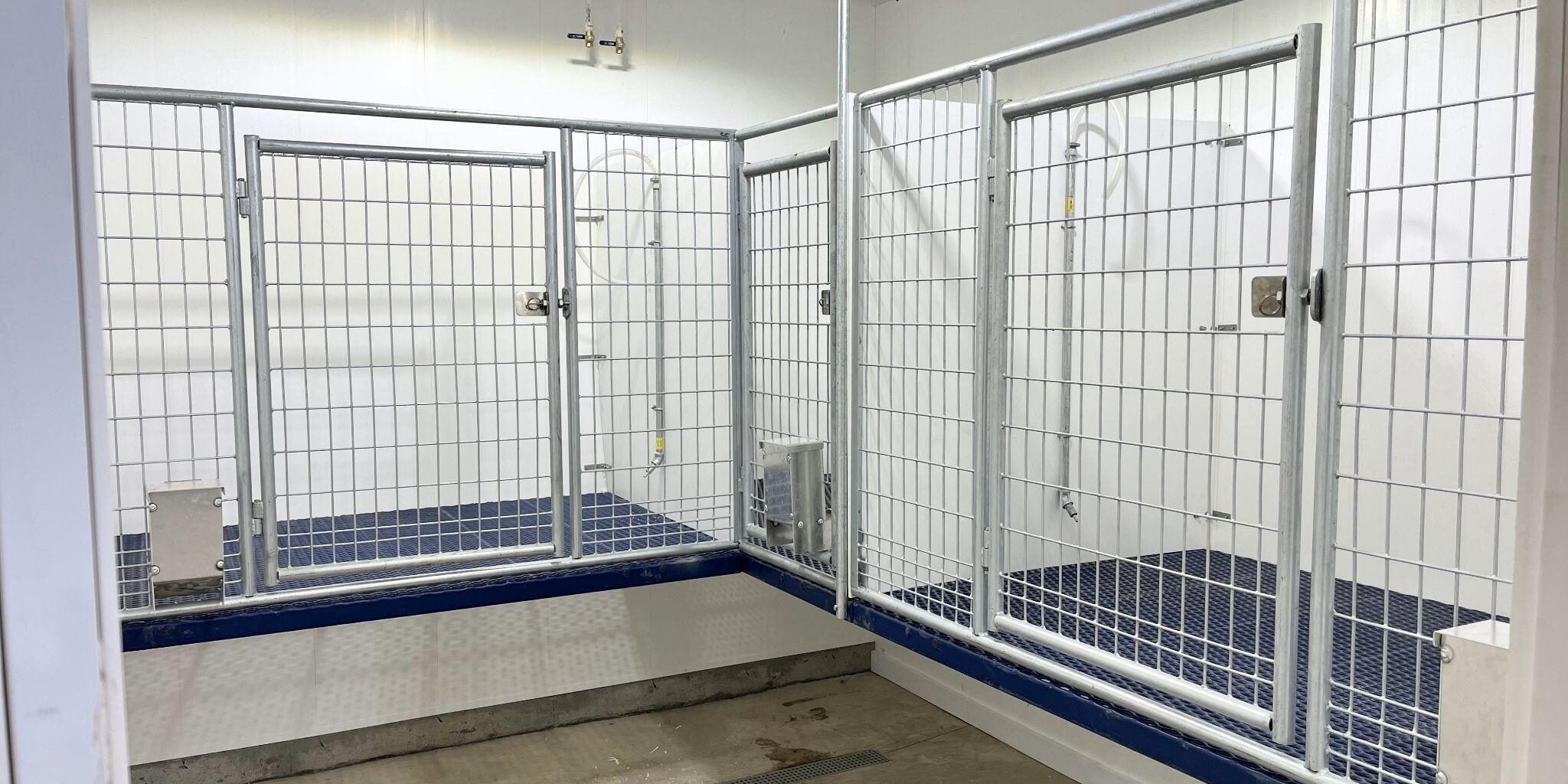
RACS whelping floors take a fundamentally different approach. Instead of absorbing fluids into the layer puppies are lying on, the raised design separates puppies from waste entirely. Diamond-shaped openings in the plastisol-coated steel mesh allow fluids and waste to pass through, keeping puppies clean and dry without constant pad changes that disrupt the dam during a vulnerable period. The openings are specifically sized so neonatal paws don’t get trapped, a design detail that matters when you’re dealing with newborns on a mesh surface.
Built-in antimicrobial protection has been independently tested to reduce E. coli and Salmonella by 99.99%. Between litters, the entire floor can be disinfected with the cleaning products breeders already use and returned to service fully sanitized. The non-porous surface means disinfectants work the way they’re supposed to, because there’s nothing for contaminants to hide in. That’s not “wipe it down and put new pads on it.” That’s real sanitation between every breeding cycle.
Keeping puppies off contaminated surfaces solves one half of the neonatal vulnerability problem. The other half is temperature. Puppies can’t regulate their own body heat until approximately two and a half weeks of age, which means the surface they’re lying on is either helping them hold heat or pulling it away. Bare metal and concrete are the worst offenders, but even plywood conducts cold in unheated whelping spaces. Absorbent pads offer some insulation when new, but they compress under the dam’s weight and lose thermal protection exactly where it’s needed most.
Plastisol stays warm at ambient room temperature. It doesn’t conduct cold the way bare metal does, and it doesn’t require supplemental heating built into the surface. In a temperature-controlled whelping room, the RACS floor itself isn’t working against the puppies.
Built for Programs That Run Year-Round
A breeder cycling through multiple litters needs whelping equipment that survives between breedings, not just within one. Pads and liners are a per-litter cost that adds up across a full breeding year. RACS whelping floors are a one-time investment. Disinfect between litters, return to service, repeat.
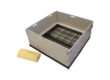
The RACS Whelping Floor is available as a 2-piece package. Each piece measures 24 by 48 inches, covering a 48-by-48-inch whelping area in a modular design that’s easy to remove for cleaning.
For facilities in colder climates or unheated whelping spaces, RACS Heat Mats provide additional thermal support underneath the whelping floor without compromising the raised design.
Made in the U.S.A. by a direct manufacturer in Northwood, Iowa. No distributor layers between your program and the production floor.
A Sanitary Whelping Environment Starts With the Surface
A sanitary whelping environment isn’t defined by how often you change the pad. It’s defined by whether the surface your puppies are born onto can be sterilized to a standard where the previous litter’s pathogens don’t carry forward. Absorbent products manage the mess during whelping. RACS whelping floors eliminate the contamination risk at the surface level, between every litter, for the life of your breeding program.
Contact a RACS representative to discuss whelping flooring for your program, or request a quote online.