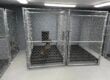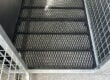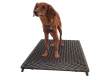
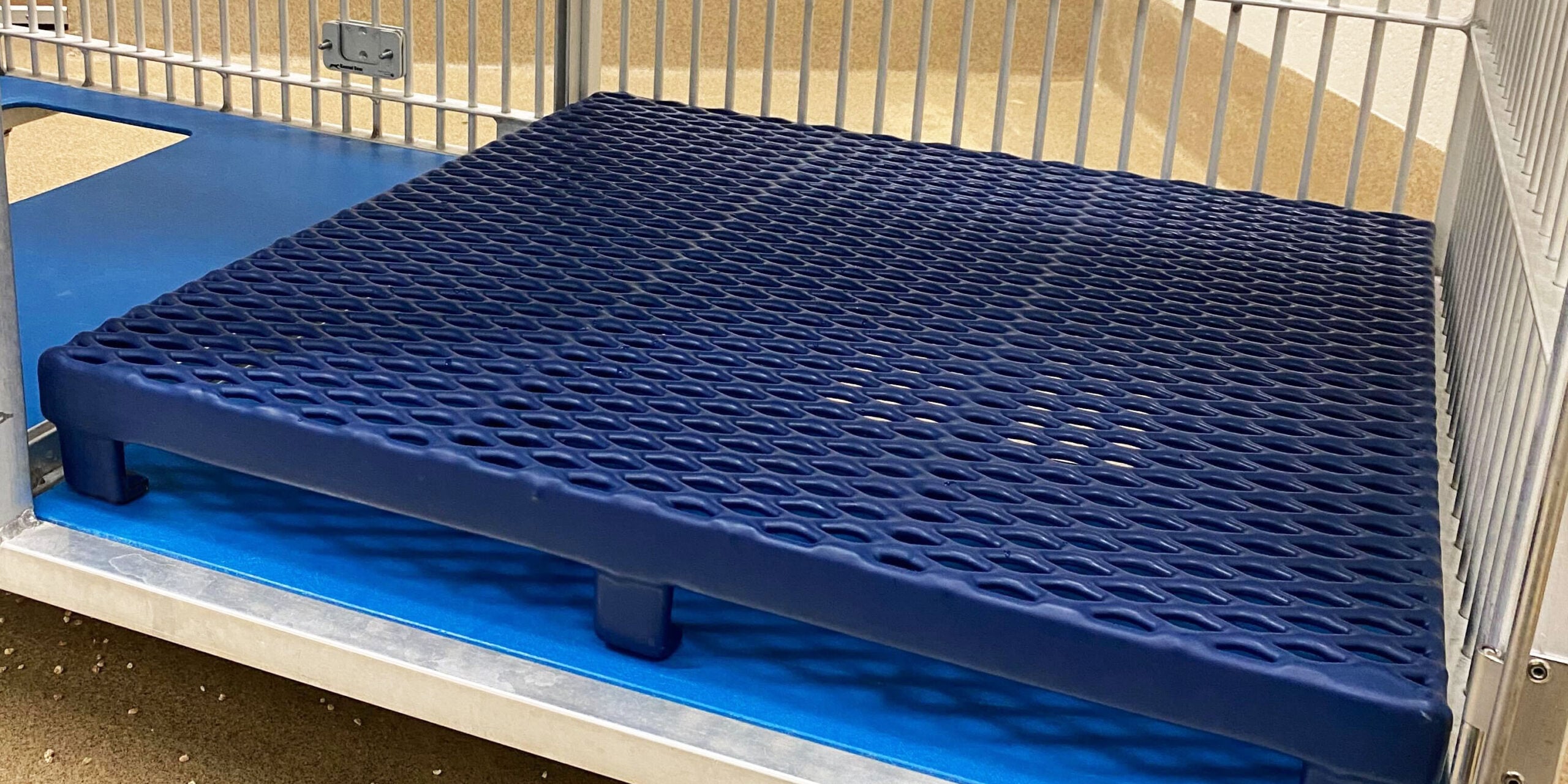
RACS Industrial Cage Floors are a complete raised flooring system built for environments where cage flooring has to perform without compromise: veterinary hospitals, university animal programs, pharmaceutical research labs, boarding operations, and any facility where animals spend extended time in enclosures. The flooring in those cages is a key part of infrastructure that directly affects animal health, staff workload, and the facility’s ability to meet the standards that govern how it operates.
Most cage flooring handles some of those demands well and fails on the rest. RACS Industrial Cage Floors handle all of them in one system. Plastisol-coated steel with built-in antimicrobial protection, custom sizing for any enclosure, and a raised design that keeps animals clean, dry, and warm at room temperature.
What Happens to Your Cage Flooring Between Cleanings Is the Problem
Every facility cleans its cages. That’s not what separates good cage flooring from bad cage flooring. The question that matters is what’s happening on the cage floor surface after it’s been cleaned and before it gets cleaned again. In a busy veterinary hospital, that might be a few hours. In a research facility running multiple protocols, it might be a full day. In a boarding operation at capacity, it might be 20 minutes between animals. Whatever the interval, that gap is where conventional cage flooring fails.
Stainless steel wire can be sanitized effectively, but bare metal has no antimicrobial properties. The moment a clean cage goes back into service, anything that lands on that surface has an open pathway to colonize. Polycarbonate cage bottoms start smooth, but daily wear and chemical exposure create micro-scratches over time. Each scratch becomes a harboring point that surface disinfectants can’t fully reach. The cage passes a visual inspection. The bacteria embedded in those scratches don’t care.
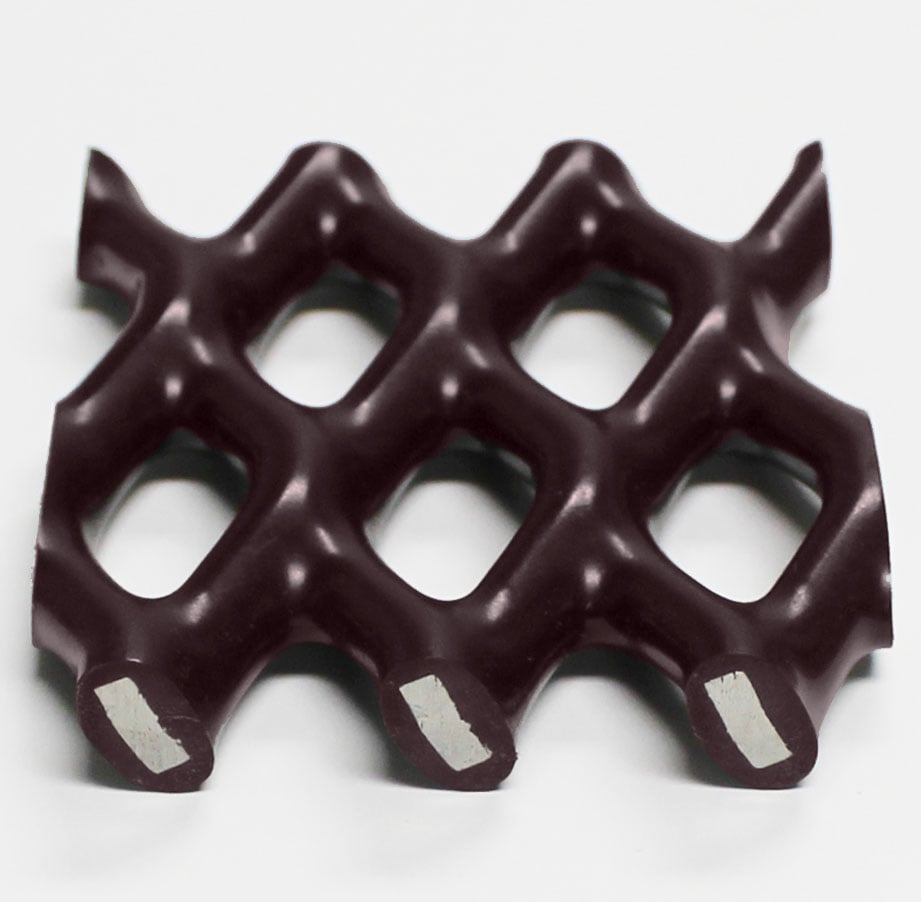
RACS Industrial Cage Floors are plastisol-coated steel. The surface is non-porous, fully sealed, with no exposed metal anywhere on the product. Built-in antimicrobial protection has been independently tested to reduce E. coli and Salmonella by 99.99%. The plastisol coating resists the chemical disinfectants facilities rely on without degrading, cracking, or exposing the steel underneath. The surface actively resists bacterial colonization between cleanings, not just when disinfectant is applied. That’s the difference between cage flooring that’s sanitizable on paper and cage flooring that stays sanitary in practice.
This isn’t just about passing an inspection. Animals housed on surfaces that harbor bacteria between cleanings are at higher risk for infection, skin irritation, and respiratory issues. Staff end up compensating with more frequent cleaning cycles, which means more chemical exposure to the flooring surface, which accelerates degradation in conventional materials. It’s a cycle that gets worse over time, not better. RACS plastisol breaks that cycle because the coating doesn’t degrade under repeated chemical exposure. The antimicrobial protection is built into the surface, not applied to it, so it doesn’t wash off or wear down with use.
For facilities that hold or pursue AAALAC accreditation, the between-cleanings gap matters directly. AAALAC evaluates cage flooring on performance outcomes, not on which material you chose. A floor that can be sanitized but doesn’t stay sanitary between cycles is a gap that shows up in the results evaluators are looking at. But even facilities that don’t operate under AAALAC accreditation benefit from flooring that stays sanitary in practice, not just on a spec sheet.
Animals Shouldn’t Have to Choose Between a Clean Surface and a Comfortable One
RACS Industrial Cage Floors solve the problem most facilities work around with add-ons: how to give animals a comfortable surface that doesn’t create sanitation headaches.
Wire-bottom caging is easy to sanitize but cold, hard, and uncomfortable for animals spending hours or days in an enclosure. It leads to foot and leg injuries in rabbits and leaves rodents on a surface they’d rather not rest on. Bare concrete cage bottoms are durable but conduct cold, stay wet after cleaning, and offer no cushioning. Plastic cage bottoms start comfortable but degrade under chemical exposure and daily wear, developing cracks that trap bacteria and eventually need replacement.
Most facilities compensate by adding bedding or supplemental padding to wire or metal cages, then dealing with the sanitation problems those add-ons create. Bedding absorbs fluids, harbors bacteria, and needs constant replacement. Padding compresses, shifts, and traps waste underneath. Every add-on is a new maintenance task, and in a facility managing dozens or hundreds of enclosures, those tasks compound fast.
RACS Industrial Cage Floors eliminate that trade-off entirely. The plastisol surface keeps animals warm at room temperature without conducting cold the way bare metal or wire does. Animals rest on a coated surface that provides traction, doesn’t shift under their weight, and doesn’t require supplemental bedding to be comfortable. The raised design separates animals from waste and moisture, so they stay clean and dry without staff needing to change bedding between every use.
Slip resistance and smooth edges are built into the same plastisol encapsulation. The surface provides consistent traction across wet, oily, and high-traffic conditions without degrading over time. Full encapsulation seals every edge, so there are no bare stamping points or rough metal at perforation borders. The safety standard is built into the coating process, not added after manufacturing.
RACS also supports recognized animal care guidelines including AVMA standards for housing and environmental conditions.
One Size Doesn’t Fit Every Cage
Facility caging comes in every configuration. Veterinary hospitals use different enclosure sizes for small and large animals. Research programs house multiple species in species-specific caging. Boarding operations run non-standard kennel dimensions. Shelters cycle through animals of every size and breed, often in enclosures that were retrofitted from an earlier use. No two facilities lay out their caging exactly the same way, and standard-size cage floors rarely fit non-standard enclosures without problems.
Most cage floor manufacturers offer a limited range of standard sizes. If your enclosure doesn’t match one of those sizes, you’re left trimming, shimming, or accepting a floor that doesn’t quite fit. When a cage floor doesn’t match the enclosure it’s sitting in, the result is gaps. Gaps between the floor and cage walls create exposed edges, shifting surfaces, and places where paws or limbs can catch. That’s an injury risk for the animal and a liability for the facility. It also creates sanitation failures at the edges where the floor meets the cage wall, because gaps collect waste, fluids, and debris that routine cleaning misses.
RACS manufactures industrial cage floors and custom animal floors to exact specifications, any size up to 10 feet. One-piece construction means no seams or joints where contamination can collect. Plastisol-coated steel and aluminum, built to the measurements your facility provides. The cage flooring that arrives fits the cage it was built for. Flush edges, full coverage, no gaps.
Because RACS is a direct manufacturer in Northwood, Iowa, there are no distributor layers between your facility and the production floor. Your team works directly with ours to provide measurements, photos, and specifications. Fifty years of manufacturing animal care flooring, every product built to order.
The Cage Floor Is Either Helping Your Facility or It’s Another Thing to Manage
Cage flooring that solves sanitation but creates comfort problems, or solves comfort but creates sanitation problems, is flooring that generates work for your staff every day. Every workaround, every supplemental layer, every extra cleaning cycle is time and cost that a better flooring system would eliminate. Facilities that switch from conventional caging to RACS report significant reductions in daily maintenance, because the flooring handles sanitation, comfort, and drainage without the add-ons that create extra work.
RACS Industrial Cage Floors are built to handle sanitation, animal comfort, surface safety, and durability in one system so your team can focus on the animals, not the equipment underneath them. The plastisol coating doesn’t degrade under repeated chemical exposure. The raised design doesn’t clog or pool. The antimicrobial protection doesn’t wash off. The surface your animals are on today performs the same way it did the day it was installed, and it will perform the same way years from now.
Whether your facility operates under AAALAC accreditation, AVMA guidelines, or internal standards that demand the same level of performance, RACS cage flooring is engineered to meet those requirements continuously. One product, built to your specifications, backed by 50 years of manufacturing animal care flooring in Northwood, Iowa.
Contact a RACS representative to discuss cage flooring for your facility, or request a quote online.